
A Weekend With 49 Grieving Kids
That Profoundly Changed Me

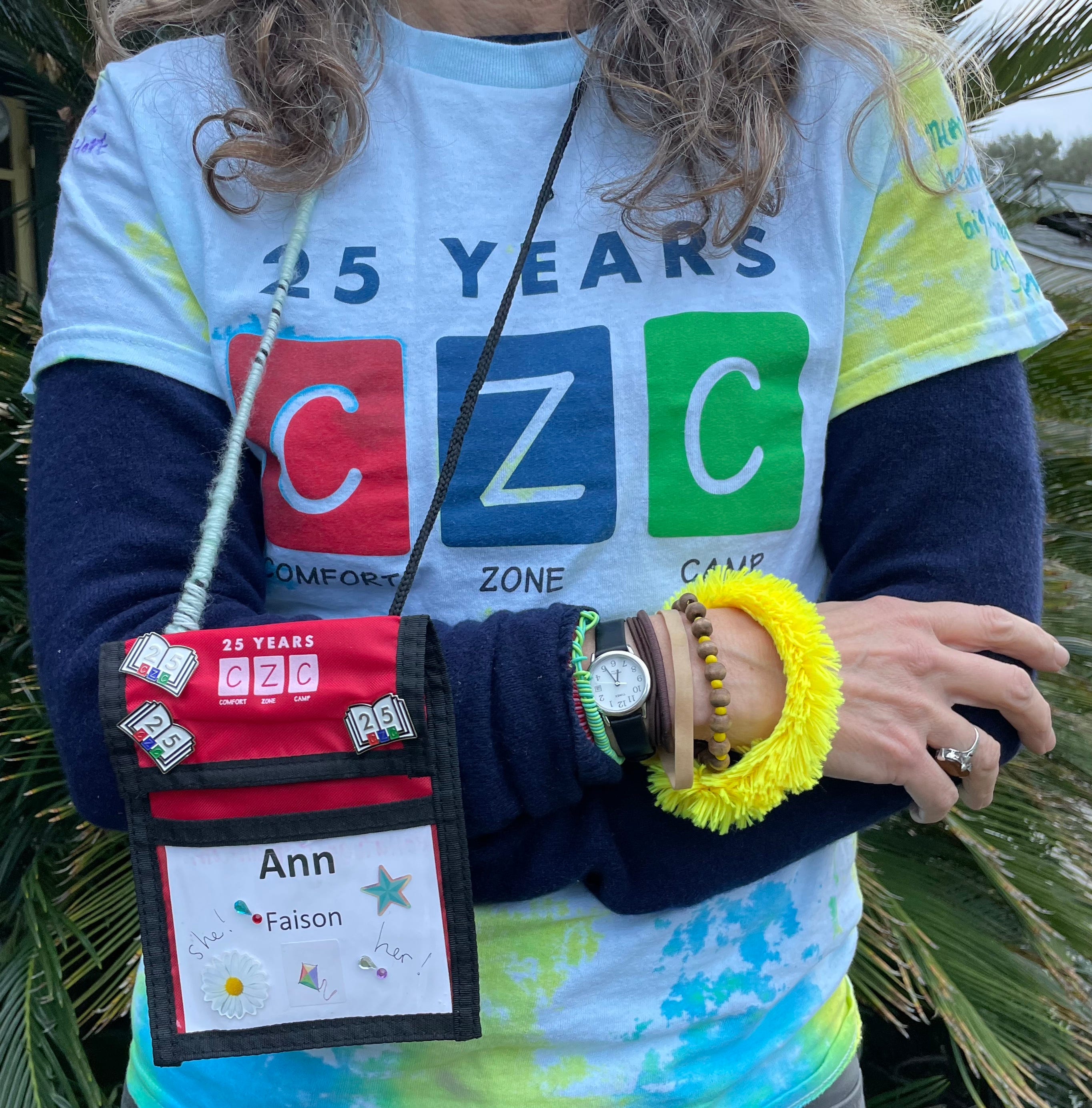
I recently volunteered at a weekend-long camp for grieving kids and I'm still processing the experience. Being in an environment where grief was openly acknowledged, spoken of and joked about for 48 hours was a gift I will not soon forget. I watched the kids arrive with attitudes that ranged from excitement to ambivalence to trepidation. Two days later it was clear from their words and body language that they were leaving with joy, gratitude, and plans to come back.
A few months ago I interviewed the founder of Comfort Zone Camp, Lynn Hughes, for the podcast (episode #20 October 12, 2023) and was so moved by her passion for helping kids that I decided to take the next opportunity to volunteer. Now I understand why so many volunteers and campers come back repeatedly. My inner fourteen-year-old had the time of her life being around a diverse group of adults and kids who share my openness to grief and the joy that results from embracing it. Even though I was there to be a supportive adult and I barely mentioned my own losses, I felt completely supported just being in what is known at CZC as "the bubble."
The thoughtful design of this particular camp comes from the founder, Lynn Hughes, who lost both her parents by the time she was 12. Lynn instinctively knows what grieving kids need, which is the space to process feelings a their own pace with lots of acknowledgement and peer support. She created a place where a hundred or more people gather to make space for grief and have fun doing it. Even though we really only spoke directly about grief in designated "healing circles" led by a trained therapist, everything else we did (ice breaker games, challenge course, arts and crafts, dance party, bonfire, etc.) was designed to also make space for creative expressions of emotions and remembrance.
The exceptional thing about CZC is the structure. It's free, and their outreach is phenomenal so the kids come from all corners of the country. (They run dozens of camp per year nationwide) Not only are the days packed from the moment you arrive on Friday afternoon to the tearful goodbyes on Sunday, the adults at camp outnumber the kids. Whereas most camps have one adult for every 3-5 kids, at CZC, every camper has a designated adult "buddy" whose job it is to look after only them. In addition to the buddies there are healing circle leaders (therapists) and assistants, photographers (there is a strict no phones/devices policy), administrators, general helpers, and a guy named Dave. Dave is the designated ringleader/cheerleader who gets everyone excited for each activity and transition. At first, it seemed like a lot of eyes on each kid. But what I quickly realized is that the buddy system allowed for each kid to feel seen, heard, and held. There was absolutely no way for anyone to slip through the cracks, go unnoticed or feel alone. This is the opposite of how most kids feel in grief. To have all that attention and permission to just be a kid, free of responsibility and the heaviness of life at home, is sheer brilliance.
For me, the camp was incredibly validating for what I am doing with the podcast and newsletter. It reinforced my view that most childhood grief is misunderstood and goes unattended. I heard heartbreaking stories of kids who don't share their feelings with their surviving parents because they feel their parents grief is "more important" than theirs is. They don't feel their surviving parent is available to support them. (I remember feeling that way.) Many bereaved kids are overburdened with taking care of their siblings or added domestic responsibilities. Many of them worry about finances. And many kids deal with the secondary loss of losing a whole side of their family in cases where a bereaved parent's in-laws may blame them for the loss. The list goes on. But it felt good and important to be there for the kids, to let them express their pain and frustration, their anger and resentment, along with their love for the person who died and the joys they associate with memories of them.
There was one teenager in our group who was especially adept at drawing others out of their shells, pulling them onto the dance floor, getting them involved in games and encouraging them to open up. Others arrived shut down and angry, ready to hate every aspect of camp. Watching kids support each other was the most beautiful thing I witnessed. Seeing so many change dramatically over the course of two days was proof that it really doesn't take that much to make a huge difference in someone's life. Because childhood is a time where deep impressions are made, I knew that as impactful as it was for me to be there, the difference it was making for the kids was many times greater.
Another thing that was glaringly obvious was the role gender plays in grief. The boys in my healing circle were much more reluctant (some even reticent) to share their feelings or stories. But it was clear they were still getting a lot out of listening and they supported each other in different ways than the girls did.
Every one of the 8 kids in our group had lost their father. And at the memorial event at the end of camp when everyone gets a chance to share who they lost, the vast majority were fathers. That prevalence of father loss can't reflect the death rate of men over women. It's got to be that when the surviving parent is the mother, she feels that the kids need support and gets them to camp. Fathers are clearly not doing that as much and I'm curious why that is. In general, mothers play a bigger role in the emotional life of children. Do fathers, in general, assume that grieving kids don’t need extra support? Or do they rely on therapy more than grief camp?
When a mother dies before the child is mature, it leaves a gaping hole in their ability to understand and express their feelings. I'm not saying it's worse to lose a mother than it is to lose a father. But it is different. And the fact that mothers seem to play a more active role in getting their kids to grief camp means there are a lot of motherless kids out there who probably don't realize it's available to them.
So I am going to continue to try to get more fathers, men and boys on my podcast to share their perspectives on childhood and adolescent grief and see if we can spread the word to more men whose kids have lost their mothers. Grief is different for everyone and everyone has to find their own way. But judging from what I witnessed this past weekend, grief camp really works, regardless of gender or who the child lost.
Beautiful inspiring work!
Amazing work the camp is doing and your work too
The writing is beautiful and insightful
Thank you for sharing this